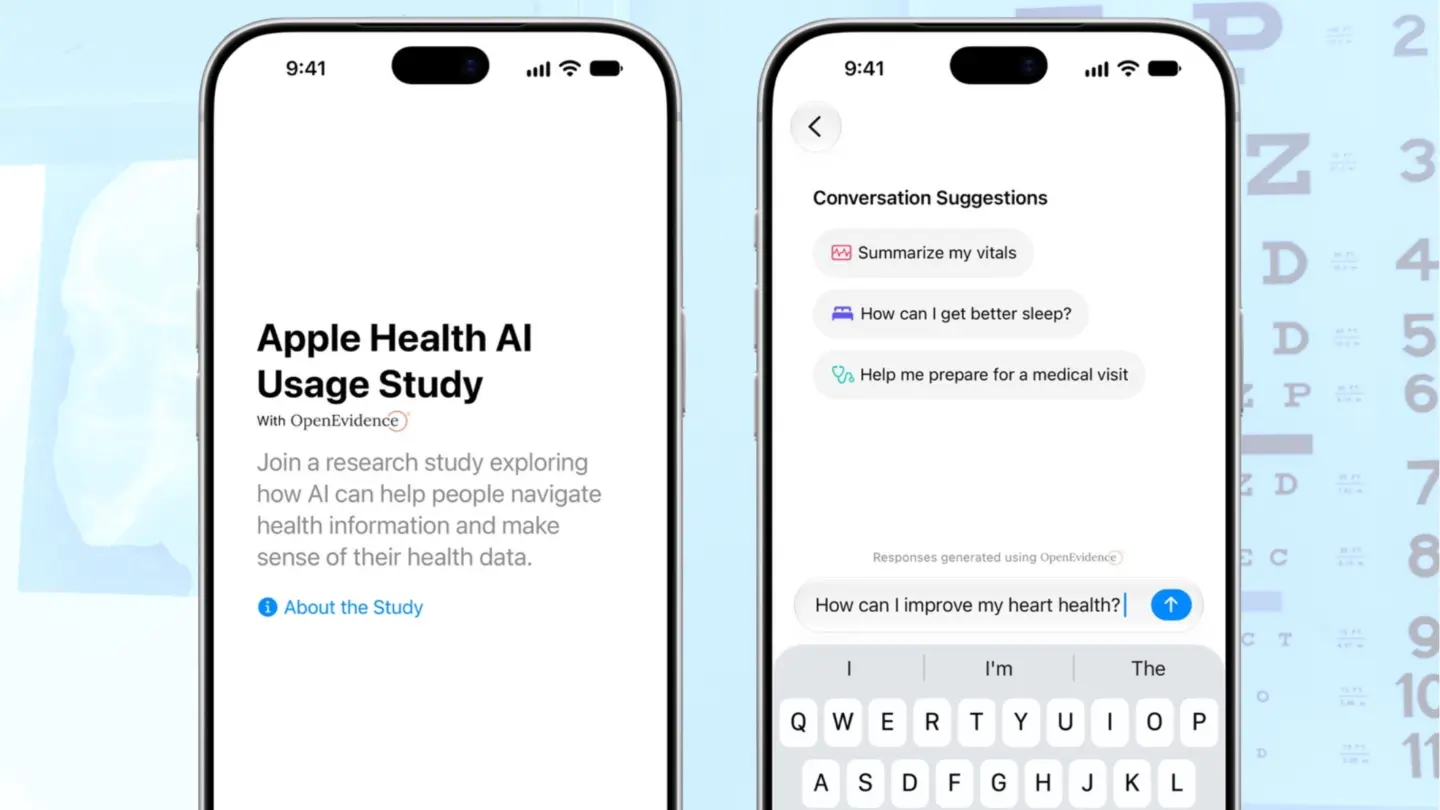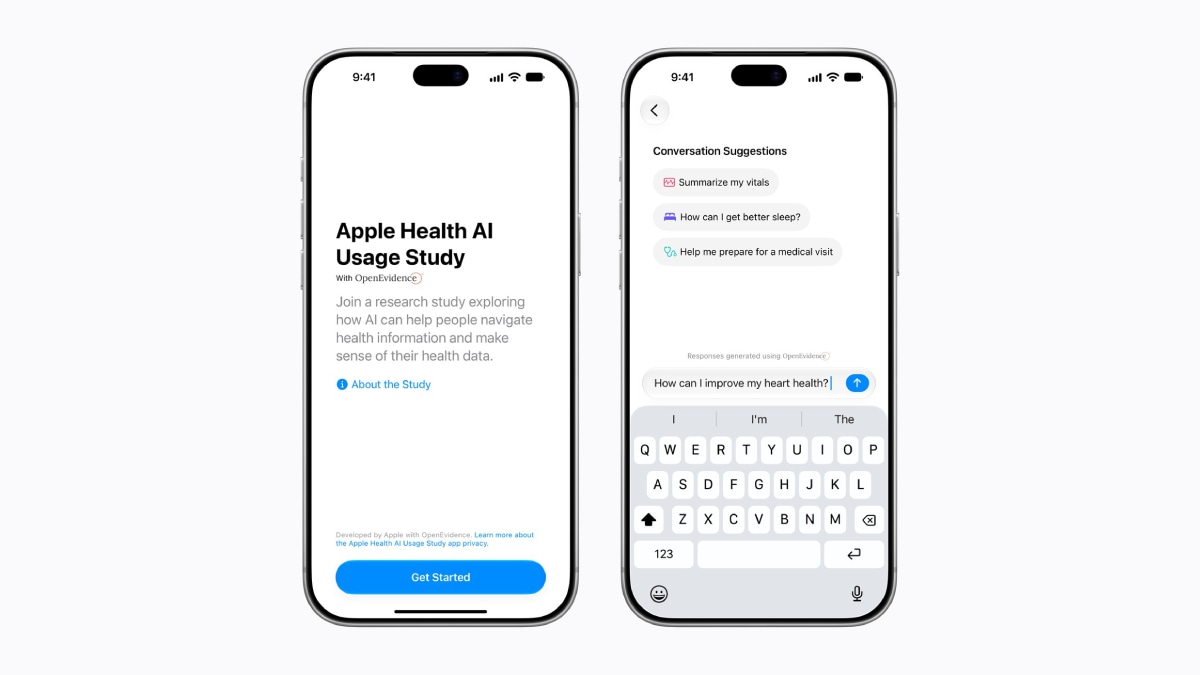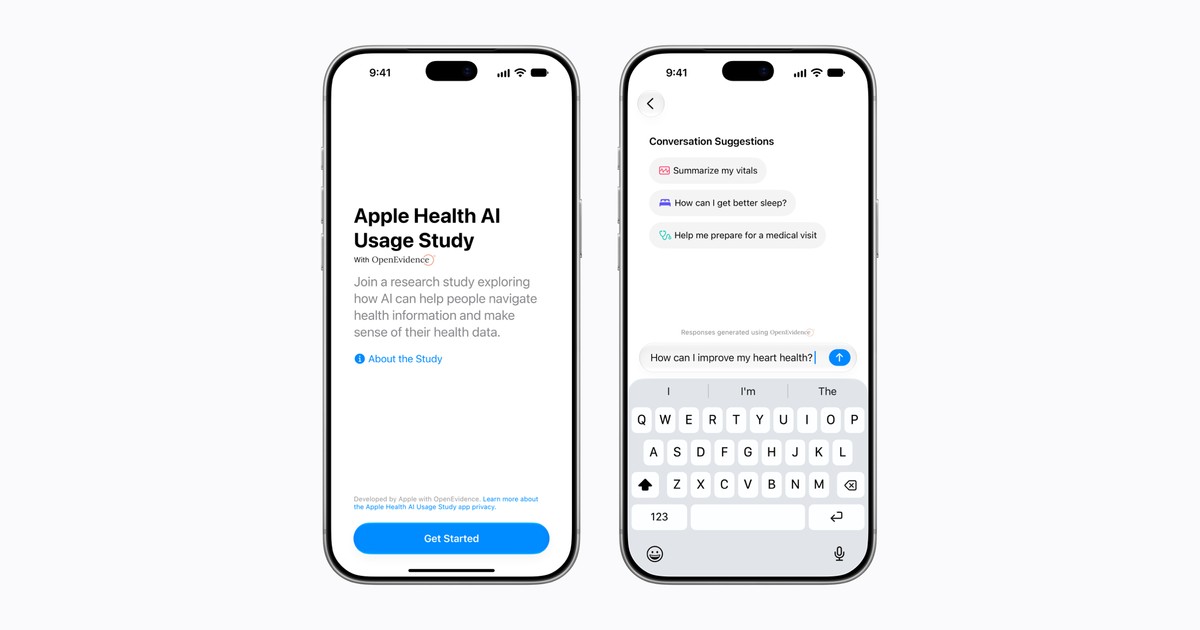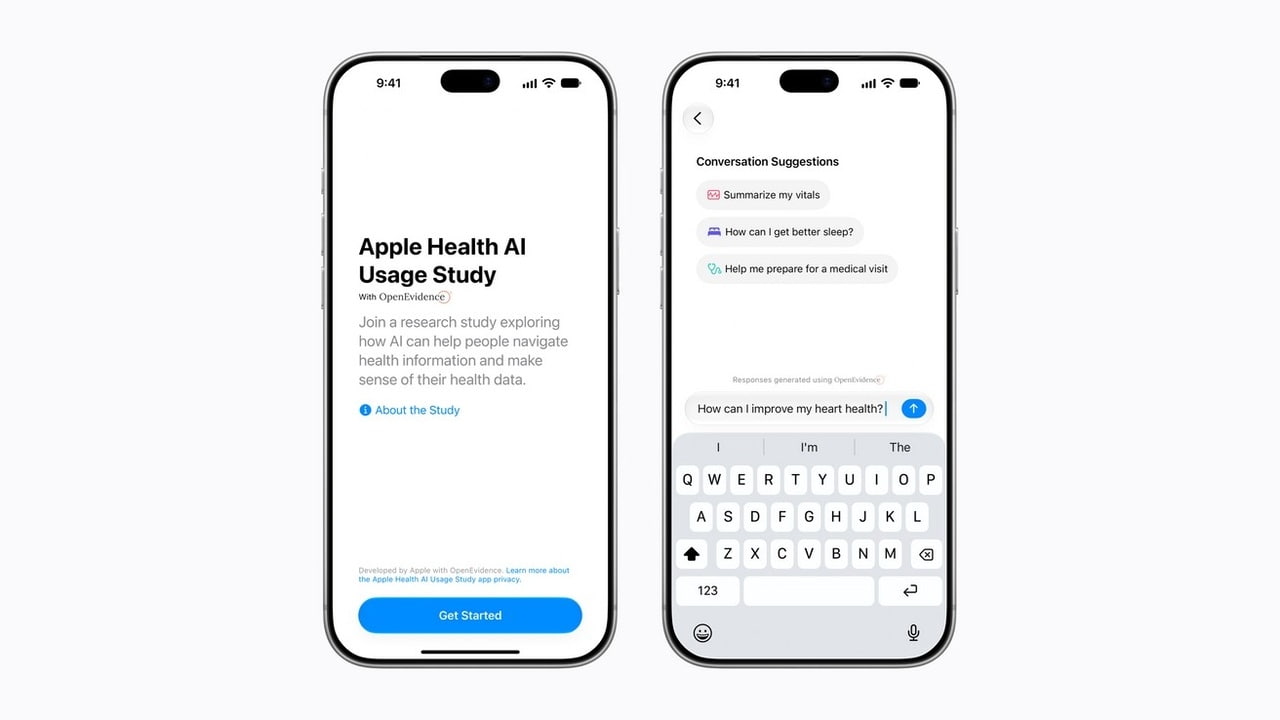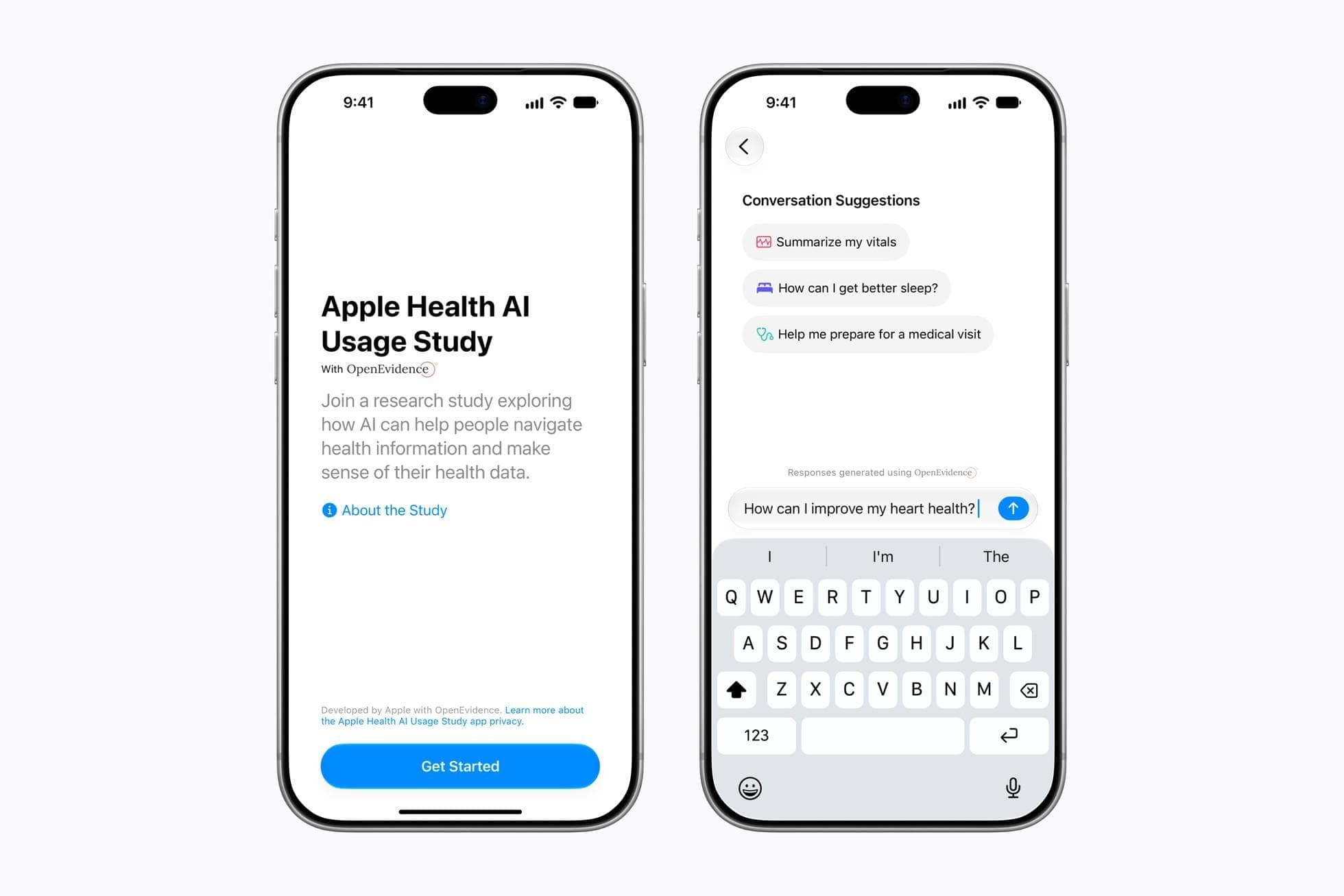


Participants will use a dedicated iPhone app to ask text-based health questions they'd normally direct to other chatbots.
Apple is working on bringing in a new health research project in the US with OpenEvidence, a clinical AI platform. It was reported that they want to see how people use artificial intelligence to...
The Health AI Usage Study will let you talk to an Apple Intelligence-powered chatbot about your health questions, so the company can gauge how good its AI is at doling out health info.
The Apple memory graph in iOS 27.3 beta uses 60 questions to find your health motivators, barriers and resources, per new code findings.
The Apple Health AI Usage Study invites up to 200,000 U.S. iPhone users to test an AI health app.
The Apple Health AI Usage Study aims to inform the responsible design of health AI experiences by examining what drives user trust, the quality of responses, comprehension, and everyday health...
A growing number of people are asking AI chatbots about their health issues, raising two major concerns: safety and privacy. Apple is now offering a safer way to do this through an Apple Health AI...
Apple's new health AI study is open to 200,000 participants, but not every iPhone qualifies. Here's who can enroll and what the research involves.
Apple plans to recruit up to 200,000 participants aged 21 and above.
Apple is examining how people use artificial intelligence to understand health information, assess medical advice and prepare for doctor consultations. Its new US-based research programme will use...
Apple today announced the launch of the Apple Health AI Usage Study in the United States, which includes a virtual research study and associated app.
Apple launches a study with OpenEvidence to explore how people use AI health tools and improve access to reliable medical information.
Apple launches a new Health AI study app with OpenEvidence, allowing iPhone users to ask medical questions and share health data voluntarily.
Apple's new research study will examine how people use AI for health information, assess the reliability of responses and understand whether such tools influence everyday health decisions
First reported:
First saved on ClustZ:
Coverage updated:
We use cookies to improve your experience and analyze site traffic. By clicking "Accept", you agree to our use of cookies. See our Privacy Policy.