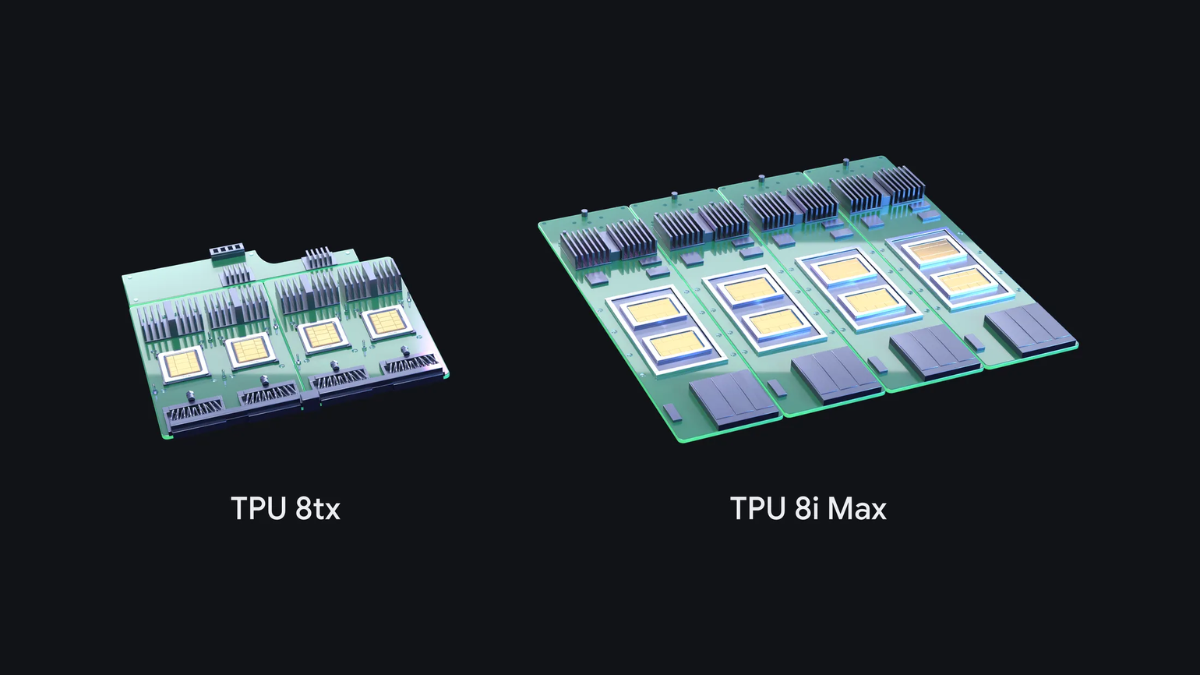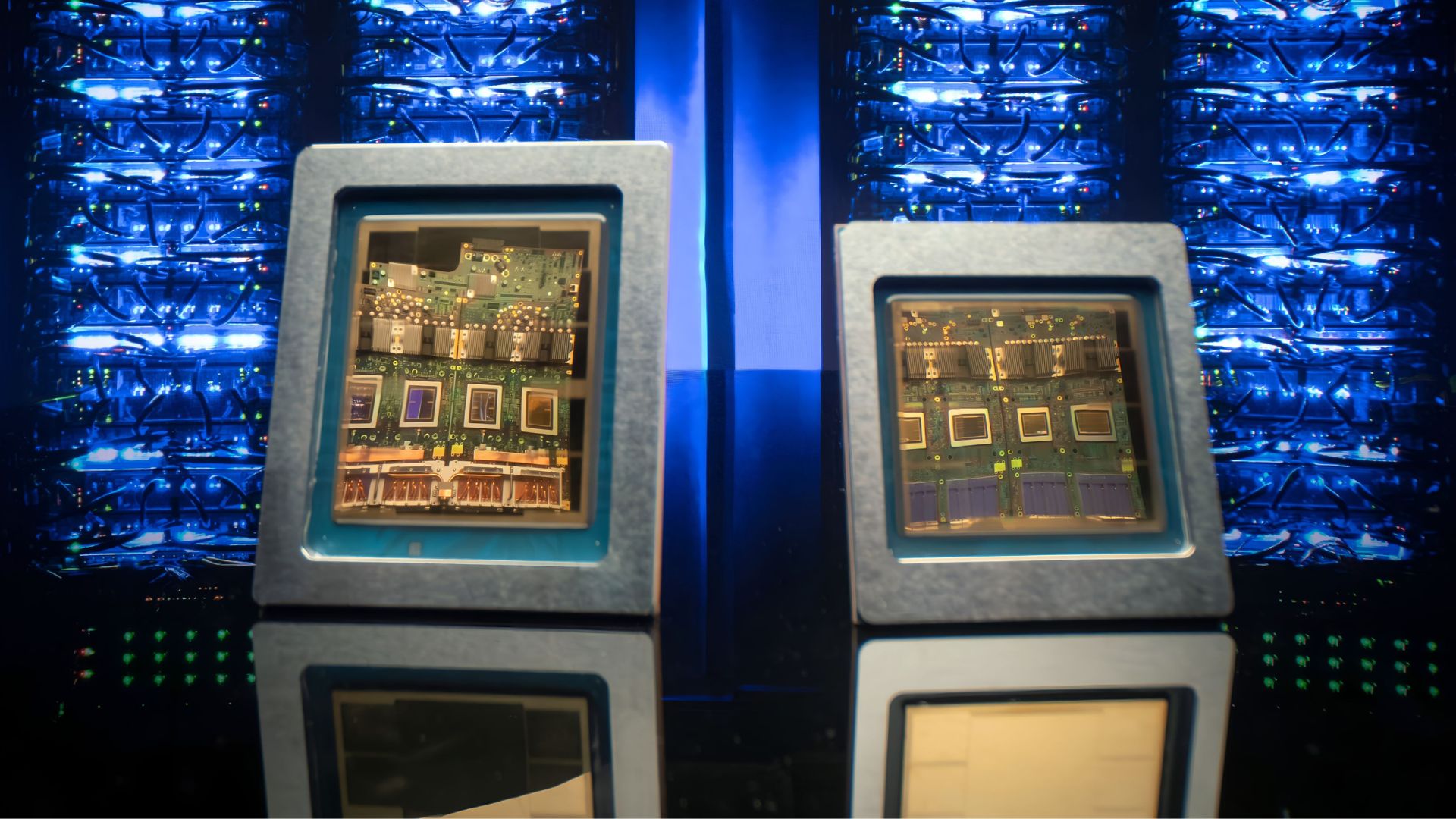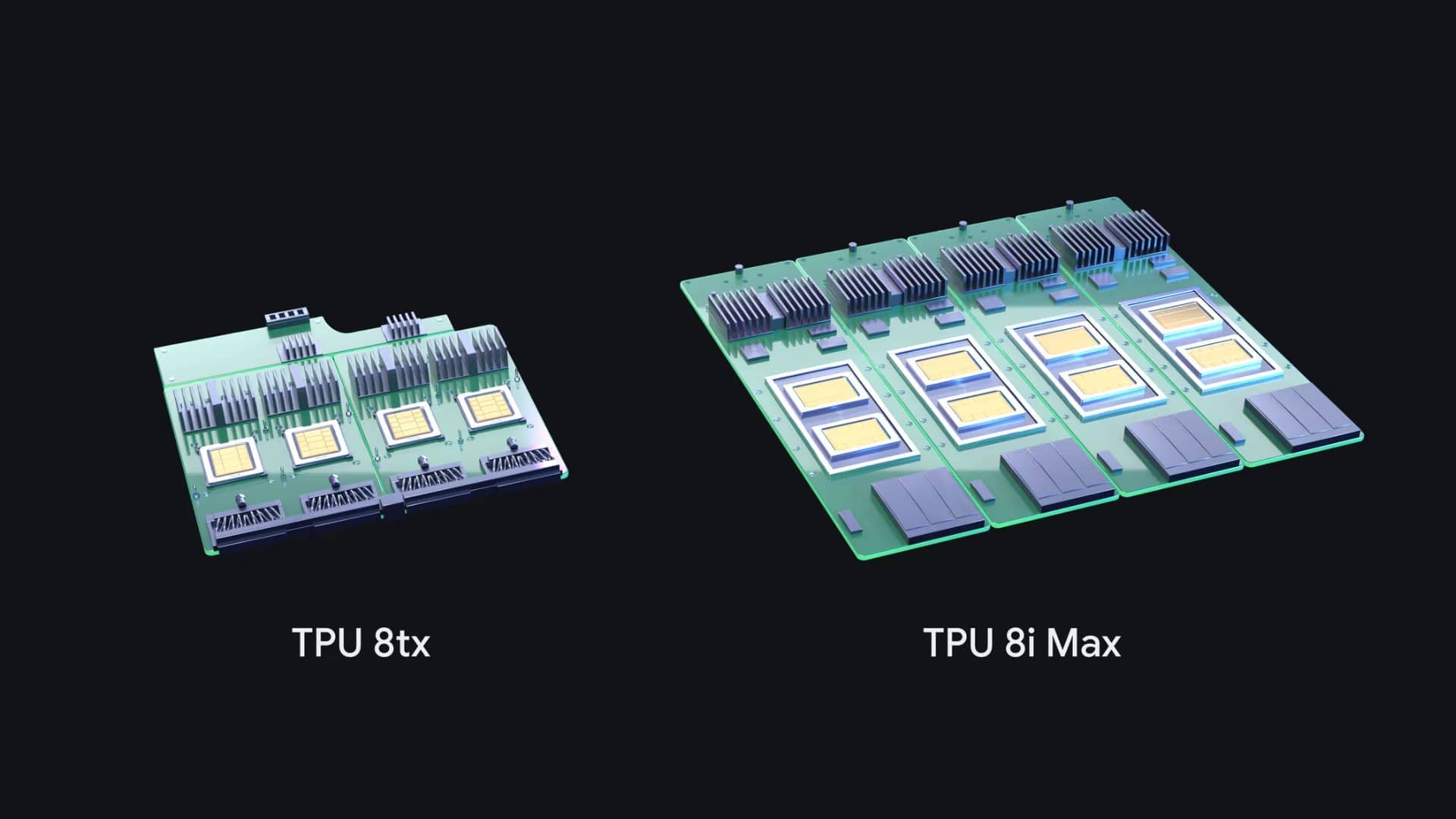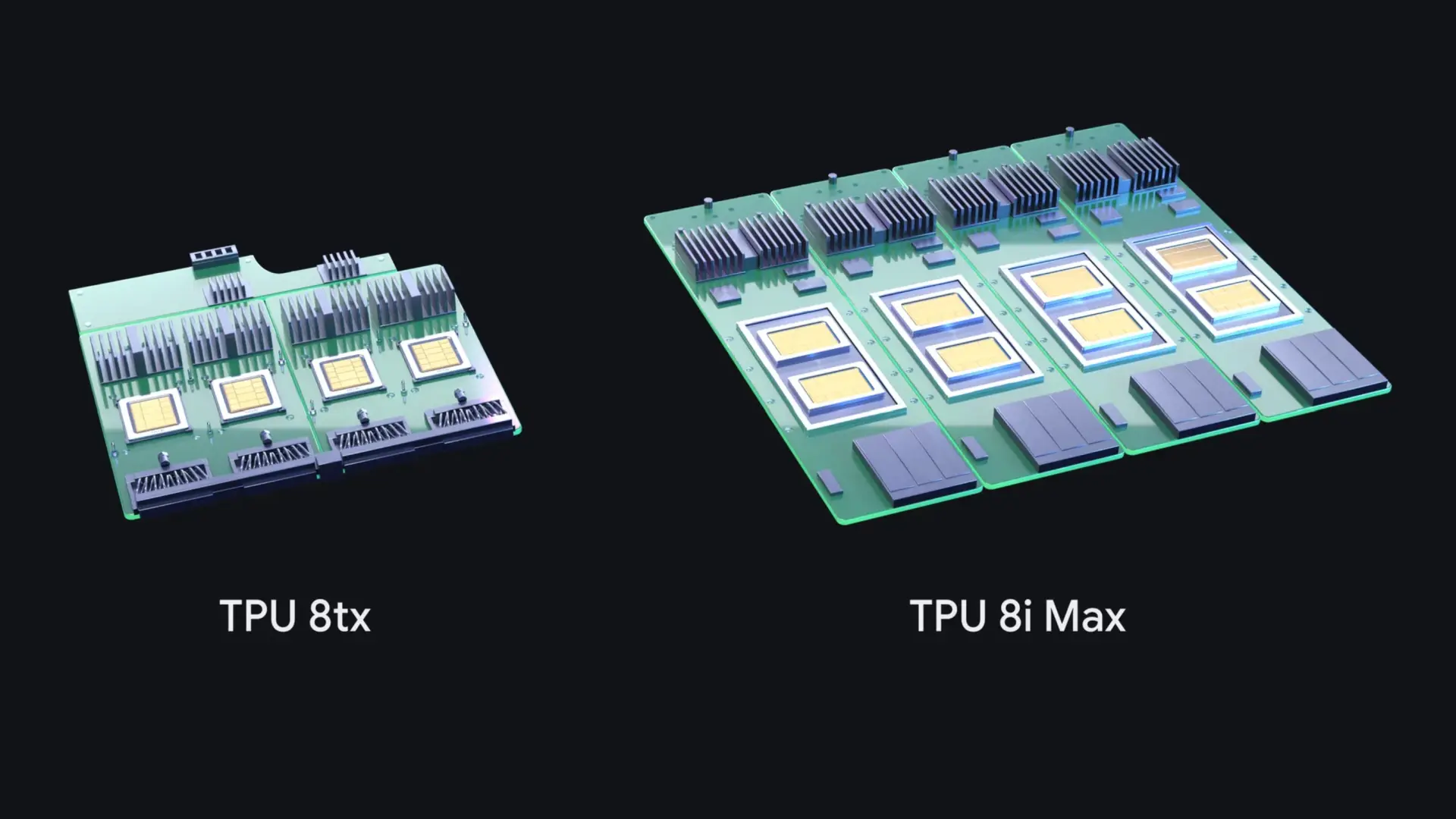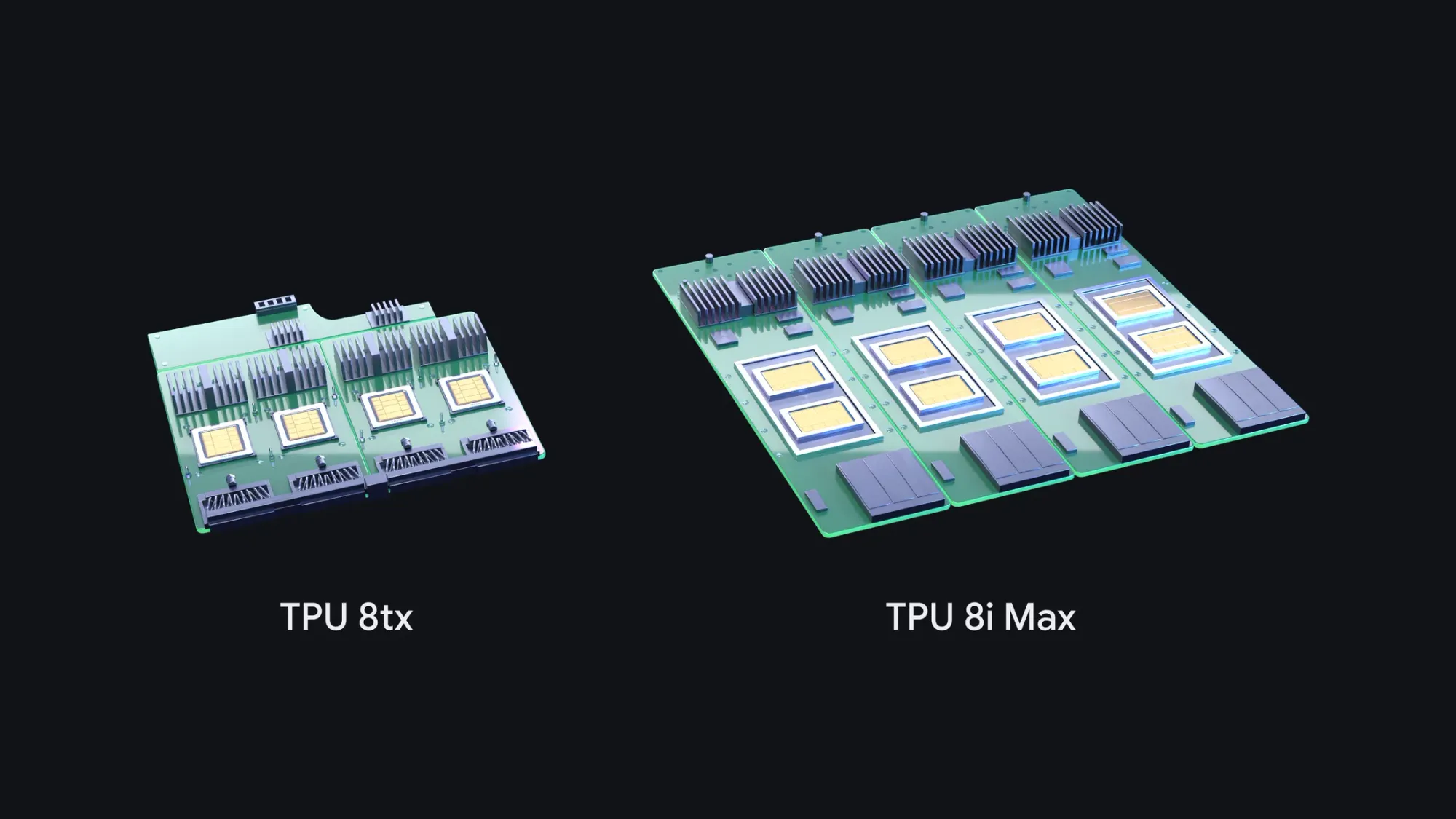


Google's TPU 8tx pairs TPU 8t silicon with AMD EPYC hosts for confidential AI, and TPU 8i Max puts two 8i chips in one package.
Google announced that this is the first time it has introduced four TPU systems in one year.
Google expands its eighth-generation TPU lineup with two new systems targeting confidential computing and massive context workloads.
On Monday, November 9, 2026, Alphabet (GOOGL) unit Google introduced TPU 8tx, a TPU system built for confidential inference, according to Google. The host processors running alongside it come from...
Google has added two new systems to its eighth-generation TPU lineup. TPU 8i Max targets massive context windows and rack density. TPU 8tx targets secure, confidential inference. Google TPU 8i Max...
Google has just expanded its TPU v8 family by introducing two new variants for agentic workloads, unlocking confidential inference and small-scale training with the TPU 8tx, while the TPU 8i Max...
Google is expanding its TPU 8 family with two specialized variants: the TPU 8tx keeps sensitive data encrypted even during processing, while the TPU 8i Max doubles compute power and memory by...
Alphabet’s Google has expanded its eighth-generation tensor processing unit (TPU) portfolio with TPU 8tx and TPU 8i Max.
Google adds TPU 8tx and TPU 8i Max, targetting secure AI inference and memory-intensive workloads, as company expands its custom chip portfolio to support enterprises deploying autonomous AI agents
Google's new tensor processing units (TPUs) broaden its chip portfolio to more use cases: confidential model training and more memory capacity.
Innovation across the semiconductor industry continues to accelerate, driven by growing demand for AI, more capable intelligent connected devices, and specialized computing across industries. As...
While we've always co-designed our TPUs in partnership with Google DeepMind, we're now increasingly getting feedback from external organizations on their specific needs. With computing moving from...
Google announced a new line of AI chips the company says are more secure than previous models and equipped for heavier workloads. The new versions of its tensor processing units—the TPU 8tx and...
Google’s TPU 8tx protects sensitive AI workloads, while the dual-chip TPU 8i Max targets memory-hungry AI agents.
Alphabet's Google is introducing two new variations of its inhouse tensor processing units, Bloomberg News reported on Monday.
The company unveiled two new variants of its existing AI chip systems as it ramps up competition with Nvidia.
Google has expanded its eighth-generation Tensor Processing Unit (TPU) portfolio with two new systems, TPU 8tx and TPU 8i Max.
Google has repackaged its existing 8t and 8i TPUs to solve enterprise pain points in security and long-context processing in AI workloads.
AI models are becoming more performant, efficient, and sophisticated by the day; but this can be incredibly taxing for the infrastructure running them. Google Cloud is addressing these growing...
They tackle two enterprise AI concerns: scaling agents eats up memory, and private data needs confidential computing.
First reported:
First saved on ClustZ:
Coverage updated:
We use cookies to improve your experience and analyze site traffic. By clicking "Accept", you agree to our use of cookies. See our Privacy Policy.